How Temperature Changes Affect Annular Notch Amorphous Inductor Core Performance
Temperature is an important factor in the performance and reliability of magnetic components. For inductors used in power electronics, industrial equipment, and high-frequency circuits, changes in operating temperature can influence magnetic characteristics, losses, and long-term stability.
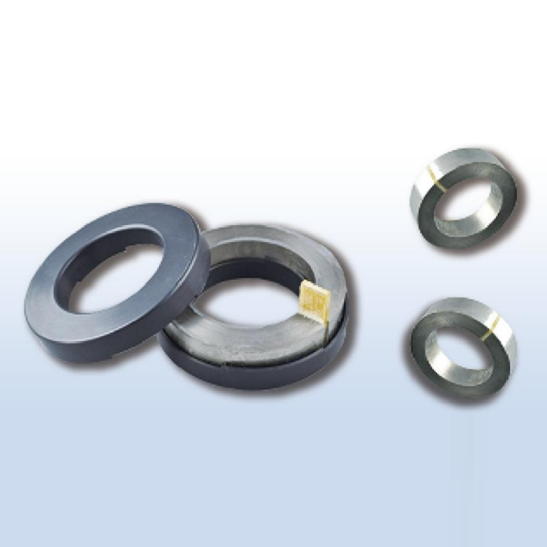
The Annular Notch Amorphous Inductor Core combines an amorphous magnetic material with a notched ring structure, making it an interesting option for applications that require efficient magnetic performance and compact component design.
Understanding how temperature affects an annular notch amorphous inductor core can help engineers select the right core and build more reliable inductor systems.
Why Temperature Matters for Inductor Cores
An inductor core operates in a changing magnetic field while the component itself may experience continuous heating.
Temperature can come from several sources, including:
- Core losses
- Winding losses
- High-frequency switching
- Ambient temperature
- Continuous electrical loading
- Limited ventilation
As temperature increases, the magnetic properties of the core can change. The degree of change depends on the magnetic material, core design, operating frequency, and actual working conditions.
For this reason, temperature stability of amorphous inductor cores should be considered during product development.
Temperature Can Influence Magnetic Properties
Magnetic materials do not behave exactly the same at every temperature.
Changes in temperature can affect parameters such as permeability, magnetic loss, and overall magnetic stability. If the core operates outside its intended temperature range, the electrical characteristics of the finished inductor may also change.
For engineers using an amorphous magnetic core for inductors, understanding the expected temperature range is therefore important.
A suitable core should maintain appropriate magnetic characteristics under the actual operating conditions of the application.
Core Loss Can Become an Important Thermal Factor
Core loss is closely connected with temperature.
During operation, part of the electrical energy is converted into heat within the magnetic core. If core loss is relatively high, the component may experience greater temperature rise.
This creates a potential cycle:
Higher core loss → more heat → higher operating temperature → possible changes in magnetic performance
Therefore, when selecting a low-loss amorphous inductor core, engineers should evaluate core loss under realistic frequency, flux density, and temperature conditions.
This is particularly relevant to high-frequency power supplies and other applications where components operate continuously.
The Notched Ring Structure Also Matters
The geometry of an annular notch amorphous inductor core can influence how the core is integrated into the final inductor.
The notch can provide structural and installation advantages depending on the winding and assembly design. However, engineers should evaluate the complete magnetic circuit rather than considering the notch as an isolated feature.
When designing an inductor, it is useful to consider:
- Core geometry
- Air-gap requirements
- Winding arrangement
- Heat dissipation
- Installation space
- Operating frequency
A well-matched structure can help the finished component achieve a balance between magnetic performance, thermal management, and mechanical integration.
High-temperature Applications Require Careful Selection
Some inductors operate in environments where temperatures can vary significantly.
Examples include:
- Industrial power supplies
- Power conversion equipment
- Renewable energy systems
- Automotive electronics
- Energy storage equipment
- High-frequency converters
In these applications, choosing a temperature-stable amorphous inductor core can be important for maintaining predictable performance.
However, engineers should not evaluate the core separately from the complete component. Winding temperature, insulation materials, enclosure design, cooling, and electrical loading can all influence the final operating temperature.
Temperature Cycling Can Affect Long-term Reliability
An inductor may not operate at one constant temperature. Instead, it can experience repeated heating and cooling during daily operation.
This is known as thermal cycling.
Repeated temperature changes may place additional stress on the complete component, particularly when different materials expand and contract at different rates.
For this reason, manufacturers developing reliable amorphous inductor cores for industrial applications should consider not only maximum temperature but also expected temperature fluctuations over the product’s service life.
Testing under realistic operating conditions can provide useful information about long-term performance.
How Engineers Can Manage Temperature Effects
Temperature-related problems can often be reduced through proper design and component selection.
Engineers can consider:
Select the Appropriate Core Material
Choose a magnetic material suitable for the expected frequency, flux density, and temperature range.
Control Core Loss
Lower core loss can help reduce unnecessary heat generation within the magnetic component.
Improve Thermal Management
Adequate airflow, heat dissipation, and component spacing can help control operating temperature.
Avoid Excessive Magnetic Flux
Operating the core within an appropriate magnetic flux range can help reduce the risk of excessive losses and abnormal heating.
Test Under Real Conditions
Testing at different temperatures and load levels can provide a more accurate understanding of actual inductor performance.
Choosing an Annular Notch Amorphous Inductor Core
Before selecting a core, manufacturers should consider several technical factors:
| Factor | Why It Matters |
| Operating Temperature | Determines required thermal stability |
| Frequency | Influences core loss and magnetic behavior |
| Flux Density | Affects magnetic performance and saturation margin |
| Core Geometry | Influences winding and installation |
| Core Loss | Directly affects heat generation |
| Application Load | Determines actual operating conditions |
| Manufacturing Consistency | Supports stable product performance |
A core that performs well in one application may not necessarily be the best choice for another. Product selection should always be based on the complete electrical and thermal requirements.
Hall Magnetics: Supporting Amorphous Inductor Core Applications
Selecting the right magnetic core is an important part of developing reliable inductors. Consistent material properties, dimensional accuracy, and manufacturing quality can also influence the final product.
Hall Magnetics specializes in magnetic core solutions for electrical and power electronics applications. Its product portfolio includes amorphous and nanocrystalline magnetic core solutions designed for different inductor and transformer applications.
For customers evaluating an annular notch amorphous inductor core, Hall Magnetics can support application-specific requirements involving core structure, dimensions, magnetic characteristics, and production needs.
By combining magnetic material expertise with manufacturing capabilities, Hall Magnetics helps customers develop magnetic components that meet the requirements of different power electronics applications.
Conclusion
Temperature can have an important influence on the performance, efficiency, and reliability of an inductor. For an Annular Notch Amorphous Inductor Core, engineers should consider magnetic stability, core loss, operating frequency, flux density, thermal management, and temperature cycling.
Rather than evaluating the core based on a single specification, it is better to consider how the magnetic material and core structure will perform under the complete operating conditions of the finished product.
With professional magnetic core manufacturing capabilities and application-focused solutions, Hall Magnetics can support customers developing reliable amorphous inductor solutions for power electronics, industrial equipment, and other demanding applications.
FAQ
1. How does temperature affect an amorphous inductor core?
Temperature changes can influence magnetic permeability, core loss, and overall magnetic stability. The actual effect depends on the material, operating frequency, flux density, and temperature range.
2. Why is low core loss important for high-temperature applications?
Lower core loss generally means less heat is generated inside the magnetic core. This can help reduce temperature rise and support more stable operation when the inductor operates continuously.
3. Can Hall Magnetics provide customized annular notch amorphous inductor cores?
Hall Magnetics can support customized magnetic core requirements based on application-specific dimensions, structures, magnetic characteristics, and production needs.