Air Gap Amorphous Ring Inductor Core: The Future of Compact Inductor Design
Efficiency and reliability are two significant performance parameters of power electronics today. The inductor core is one of the most critical elements that contribute directly. When power conversion has to be done more efficiently in applications, innovations such as air gap amorphous core and air gap amorphous ring inductor core are leading the way in innovative inductor development. This essay addresses what these cores are, why they are crucial, and how they are revolutionizing applications in energy systems.
What is an Inductor Core?
An inductor core is a magnetic material inside a coil to focus magnetic flux and optimize energy storage efficiency. Focusing the magnetic field, the core raises the inductance value and reduces the turns needed. Ferrite, powder iron, or silicon steel were traditionally employed to fabricate cores. These materials, though conventional, have drawbacks regarding losses, frequency response, and thermal stability.
It is where the amorphous metal materials come into action. Due to their new atomic structure, amorphous alloys provide less core loss, higher permeability, and improved temperature performance than traditional crystalline materials.
The Role of Air Gap in Inductor Cores
In inductor design of power conversion, an air gap is typically employed in the core. The air gap serves to prevent magnetic saturation such that the inductor can store more energy. Installing an air gap in typical cores would cause issues such as high loss and spread-out magnetic leakage, however.
An air gap amorphous core overcomes such restrictions by combining amorphous alloys’ low-loss characteristics with properly designed air gaps. The result is a core that not only offers more energy storage but also reduces heat generation, making it ideal for modern high-frequency and high-power applications.
Air Gap Amorphous Ring Inductor Core
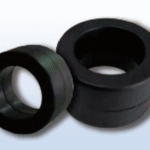
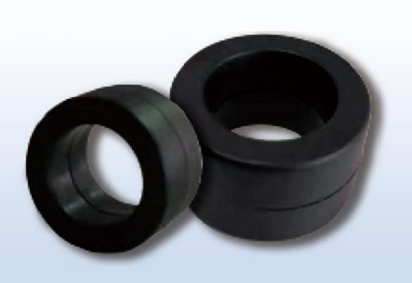
Use of this technology in the specialty field is the air gap amorphous ring inductor core. Closed-loop ring geometry is used for this kind of core, and air gaps are introduced in the ring in a controlled way in a distributed pattern. The ring structure gives a uniform magnetic flux distribution to prevent hot spots and noise.
Some of the significant advantages of an air gap amorphous ring inductor core are:
- High efficiency: Low hysteresis and eddy current loss as compared to ferrite cores.
- Thermal stability: Better temperature properties, retaining reliability in extreme conditions.
- Compact design: High energy density facilitates compact inductors without compromising performance.
- Wide frequency range: Suitable for switching power supplies, inverters, and renewable energy systems.
Air gap amorphous ring inductor cores are used more extensively in electric vehicle chargers, photovoltaic inverters, and other high-efficiency energy systems because of these benefits.
Why Air Gap Amorphous Core Technology Matters
Cleaner energy and transportation electrification have created ongoing demand for efficient, smaller, and longer-lasting components. The air gap amorphous core supports this trend by allowing inductors with greater frequency capability and reduced wasted energy.
Compared to the traditional ferrite-based cores, amorphous alloy cores offer:
- Lower core loss: As much as 70% lower than ferrites at certain frequency ranges.
- Higher power density: Smaller inductors for the same levels of performance.
- Higher reliability: Resistance to thermal stress and lower noise.
Overall, the move towards amorphous-based inductor cores represents more than incremental improvement but rather a step change in power electronics system design.
Applications of Air Gap Amorphous Inductor Cores
- Switching Power Supplies – High-efficiency power supplies are made possible by lower losses and higher reliability.
- Renewable Energy Systems – Solar inverters and wind converters employ these cores to manage variable power effectively.
- Electric Vehicles – Inboard chargers and DC-DC converters require small, thermal-stability inductors, ideally supplied by air gap amorphous cores.
- Industrial Equipment – Robots and automation devices utilize high-efficiency inductors for motor drive and power control.
In each of these applications, the fabricated amorphous material and engineered air gap structure lead to improved system performance and life.
The Future of Inductor Core Design
Since industries will keep demanding higher and higher levels of energy efficiency, the demand for more advanced inductor core solutions will be higher than ever before. Air gap amorphous core and air gap amorphous ring inductor core are the future of magnetic components, designed to meet the needs of applications in present-day technology where efficiency and reliability can’t be compromised.
Manufacturers are investing in simplifying production processes, reducing costs, and introducing new shapes and sizes. That augurs well for wider application across industries in the years to come.
Conclusion
The evolution of the inductor core from traditional ferrite to state-of-the-art air gap amorphous core technology is a landmark in power electronics. With its increased efficiency, thermal stability, and packaging, the air gap amorphous ring inductor core will be an enabler of green high-performance energy systems.
With more uses in renewable energy, electric vehicles, and industrial automation, these centers of innovation will keep driving efficient power conversion, shaping the future of smarter and greener technologies.