Balancing Accuracy and Size with Nano-crystal Ring-shaped Current Transformer Cores

In modern power distribution and electrical measurement systems, current transformers need to deliver accurate current measurement without taking up excessive installation space. As electrical equipment becomes more compact and monitoring requirements become more demanding, engineers are increasingly looking for magnetic core materials that can provide both high performance and compact dimensions.
A nano-crystal ring-shaped iron core for current transformers offers an effective solution to this challenge. Its magnetic properties can support sensitive and stable current measurement while allowing manufacturers to develop smaller CT structures. This makes nano-crystalline cores particularly valuable for applications where installation space, measurement accuracy, and long-term reliability all matter.
Why Current Transformer Size Matters
Traditional current transformer designs can become relatively large when higher measurement performance is required. A larger core may provide sufficient magnetic capability, but it can also increase the overall size and weight of the finished CT.
This can create challenges in:
- Compact power distribution cabinets
- Metering equipment
- Industrial control panels
- Energy monitoring systems
- Smart electrical equipment
- Retrofitting existing electrical installations
For engineers searching for a compact current transformer core with high accuracy, the goal is not simply to reduce physical dimensions. The core must still provide suitable magnetic characteristics for the intended current range and operating conditions.
This is where material selection becomes especially important.

How Nano-crystal Cores Help Balance Size and Accuracy
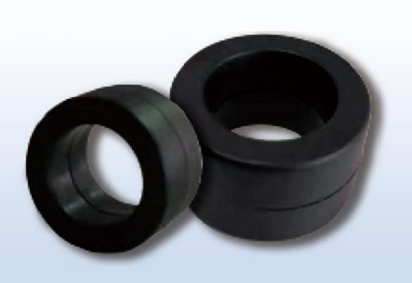
Nano-crystalline magnetic materials have very fine grain structures that provide favorable magnetic properties. When formed into a ring-shaped core, the material can be used to create a magnetic circuit that is well suited to current transformer applications.
A properly designed nano-crystalline current transformer core can help manufacturers achieve the magnetic performance required for current sensing while maintaining a relatively compact core structure.
The relationship between core size and accuracy is not always straightforward. Simply making a core smaller can affect its magnetic performance. Instead, engineers need to consider the magnetic material, core cross-sectional area, winding arrangement, operating current, and required accuracy together.
Nano-crystal materials provide another design option for achieving this balance.
The Importance of Magnetic Properties in Compact CT Design
Current transformers operate by transferring the magnetic effect of a primary current to a secondary winding. The core therefore plays a central role in the overall performance of the transformer.
When designing a high-precision current transformer core, several magnetic characteristics need to be considered.
High Magnetic Permeability
High permeability allows the core to respond effectively to relatively small changes in magnetic field. This can be beneficial for current measurement applications where sensitivity is important.
For compact CT designs, suitable permeability can help engineers achieve the desired measurement characteristics without relying only on a physically larger core.
Low Core Loss
Core loss contributes to energy dissipation during operation. Selecting an appropriate magnetic material can help reduce unnecessary losses and support more efficient transformer operation.
For equipment operating continuously, such characteristics can be particularly valuable.
Stable Magnetic Performance
Electrical loads do not always remain constant. Industrial equipment, distribution systems, and electronic devices may experience changing current levels during normal operation.
A suitable nano-crystal ring-shaped core for current measurement should therefore be selected according to the expected operating conditions rather than based on size alone.
Finding the Right Balance Between Core Size and Measurement Accuracy
Reducing CT size while maintaining accuracy requires a system-level approach.
The first factor is the measurement range. A transformer designed for low-current measurement may have different core requirements from one designed for high-current applications.
The second factor is the accuracy requirement. Metering applications may place greater emphasis on measurement precision, while other applications may prioritize protection or general current monitoring.
The third factor is the available installation space. In compact switchgear and control cabinets, even a small reduction in component dimensions can make installation easier.
The fourth factor is the winding design. The number and arrangement of secondary turns interact with the magnetic properties of the core. Therefore, the core should not be evaluated independently from the complete CT design.
This is why choosing a nano-crystal ring-shaped iron core for current transformer production should involve communication between the core supplier and CT manufacturer.
Applications of Compact Nano-crystal Current Transformer Cores
The combination of compact dimensions and suitable magnetic performance makes nano-crystalline ring cores useful for a variety of applications.
Power Metering
Energy meters require reliable current measurement over their expected operating range. A compact core can help manufacturers develop smaller metering components while maintaining the required electrical characteristics.
Industrial Energy Monitoring
Factories increasingly monitor individual machines, production lines, and electrical distribution circuits. Compact current transformers can be integrated into control cabinets without occupying unnecessary space.
Power Distribution Equipment
Modern distribution equipment often needs to accommodate multiple measurement and protection components within limited cabinet space. A compact current transformer magnetic core can provide greater flexibility for equipment designers.
Smart Electrical Devices
Smart meters, monitoring systems, and connected electrical equipment require increasingly compact sensing components. Nano-crystalline materials can support the development of smaller CT solutions for these applications.
What Engineers Should Consider Before Choosing a Nano-crystal Ring Core
Selecting a core based only on dimensions can lead to poor results. Engineers should evaluate several parameters together.
Core dimensions: Outer diameter, inner diameter, and height must fit the mechanical design.
Material characteristics: Magnetic properties should correspond to the intended measurement requirements.
Current range: The expected primary current and measurement range directly influence core selection.
Frequency: The operating frequency should be considered when evaluating core performance.
Accuracy requirements: Measurement accuracy should be defined before choosing the core.
Winding configuration: The core must work effectively with the planned winding structure.
Operating environment: Temperature and other environmental conditions can affect magnetic performance and should be considered during design.
For manufacturers developing a custom nano-crystal current transformer core, discussing these requirements with an experienced magnetic core supplier can make the selection process more efficient.
Why Work with an Experienced Magnetic Core Manufacturer?
The core is only one component of a current transformer, but it has a major influence on the final product’s electrical characteristics. A manufacturer with experience in nano-crystalline magnetic materials can help customers evaluate core dimensions, material selection, and application requirements together.
Hall Magnetics focuses on magnetic core solutions for electrical and power applications. By combining material expertise with practical manufacturing experience, Hall Magnetics can provide nano-crystal ring-shaped core solutions for different current transformer designs.
For customers looking for a nano-crystalline ring core manufacturer for current transformers, customized dimensions and application-specific requirements can be important considerations when developing a new CT product.
Conclusion
Balancing accuracy and size is one of the key challenges in modern current transformer design. A larger core is not automatically better, while reducing dimensions without considering magnetic performance can compromise the intended application.
A properly selected nano-crystal ring-shaped iron core for current transformers can help engineers approach this balance by combining favorable magnetic characteristics with a compact ring-shaped structure.
Whether the application involves power metering, industrial energy monitoring, distribution equipment, or smart electrical systems, the right core should be selected according to current range, accuracy, frequency, winding design, dimensions, and operating environment.
For manufacturers seeking reliable and application-focused magnetic core solutions, Hall Magnetics provides a practical option for developing compact and high-performance current transformer core designs.
FAQ
1. Why are nano-crystal cores suitable for compact current transformers?
Nano-crystalline magnetic materials offer favorable magnetic properties that can support sensitive current measurement. This allows engineers to explore compact CT designs without relying solely on larger conventional cores.
2. Does a smaller current transformer core always provide lower accuracy?
No. Core size is only one factor affecting CT performance. Material characteristics, core dimensions, winding design, current range, frequency, and accuracy requirements all need to be considered together.
3. Can nano-crystal ring-shaped cores be customized for current transformers?
Yes. Depending on the application, core dimensions and other design requirements can be developed around the customer’s current transformer structure. It is recommended to confirm the electrical and mechanical requirements before selecting the final core.