How Air Gap Design Enhances Energy Handling in Amorphous Ring Inductor Cores
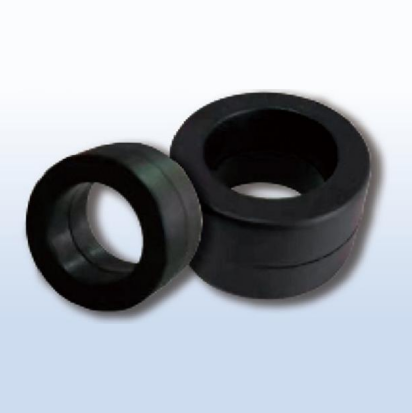
In modern power electronics, inductors are expected to handle higher energy levels, larger current fluctuations, and increasingly compact system designs. Among various magnetic solutions, amorphous ring inductor cores with air gap design have become a preferred choice for engineers who need both magnetic efficiency and stable energy storage.
The introduction of an air gap fundamentally changes how an amorphous core stores and releases energy. Instead of focusing only on permeability, air gap design allows engineers to control saturation behavior, linearity, and overall energy handling capability. This article explains how air gap design enhances energy handling in amorphous ring inductor cores, and why it plays a critical role in high-performance power systems.
Energy Storage Challenges in High-Power Inductors
Energy stored in an inductor is proportional to inductance and the square of current. As operating current increases, traditional high-permeability cores tend to saturate quickly. Once saturation occurs:
- Inductance drops sharply
- Current ripple increases
- Core losses rise
- Circuit stability is compromised
Amorphous materials already offer low core loss and high saturation flux density, but without an air gap, even amorphous ring cores can struggle under heavy DC bias or transient loads. This is where air gap design becomes essential.
The Role of Air Gap in Energy Handling
Controlled Magnetic Saturation
The air gap introduces a region of low permeability into the magnetic circuit. This reduces the effective permeability of the core, which may sound counterintuitive, but it significantly delays magnetic saturation. As a result, the inductor can handle higher current before reaching saturation.
This controlled saturation behavior allows amorphous ring inductor cores to operate reliably in applications with wide current swings, such as power converters and inverters.
Increased Energy Storage Capability
Most of the magnetic energy in an inductor with an air gap is stored in the gap itself rather than in the core material. This means:
- Energy storage becomes more predictable
- Core material stress is reduced
- Thermal stability improves
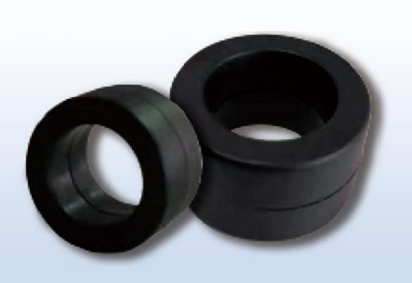
For amorphous ring inductor cores, this combination of material properties and air gap structure results in higher usable energy density, especially under DC bias conditions.
Improved Linearity Under DC Bias
One of the main advantages of air gap design is improved inductance linearity. In practical power electronics systems, DC bias is almost unavoidable. Without an air gap, inductance can drop rapidly as DC current increases.
With a properly designed air gap:
- Inductance decreases gradually instead of abruptly
- Magnetic characteristics remain stable across operating range
- Control algorithms become easier to implement
This makes air gap amorphous ring inductor cores particularly suitable for applications such as PFC circuits, DC-DC converters, and energy storage systems.
Thermal Benefits of Air Gap Design
Energy handling is not only about magnetic performance—it is also closely related to heat management. Air gap design contributes to thermal stability in several ways:
- Reduced core loss under high flux
- Lower hysteresis stress on amorphous material
- More even heat distribution across the core
When combined with the naturally low loss characteristics of amorphous alloys, air gap structures help ensure long-term reliability in continuous operation environments.
Design Flexibility for Different Power Applications
Air gap amorphous ring inductor cores offer engineers more design freedom. By adjusting the gap length and distribution, designers can fine-tune:
- Inductance value
- Saturation current
- Energy storage capacity
This flexibility makes them adaptable to a wide range of power electronics applications, from industrial power supplies to renewable energy systems.
Manufacturing Considerations and Consistency
Precision in air gap processing is critical. Inconsistent gap dimensions can lead to performance variation and acoustic noise. High-quality manufacturers use controlled cutting and bonding techniques to ensure:
- Tight inductance tolerance
- Stable magnetic performance
- Repeatable energy handling characteristics
This is an important factor when selecting a supplier for amorphous ring inductor cores.
Conclusion
Air gap design is a key enabler for enhanced energy handling in amorphous ring inductor cores. By controlling saturation, improving linearity under DC bias, and supporting higher energy density, air gap structures unlock the full potential of amorphous magnetic materials.
Manufacturers such as Hall Magnetics focus on precise air gap control and consistent core quality, helping engineers achieve reliable performance in demanding power electronics applications.