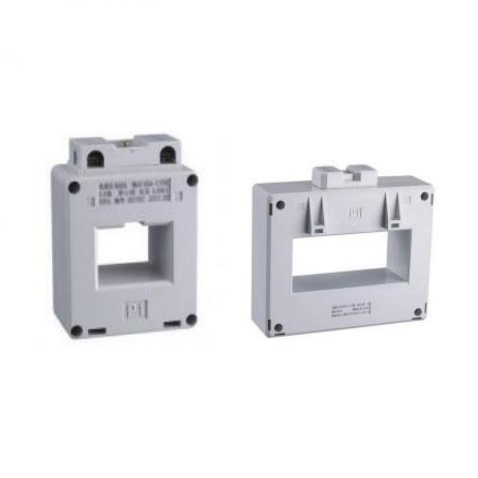
How Nano-crystal Ring-shaped Iron Cores Boost Signal Fidelity in Current Transformers

In modern power monitoring and protection systems, maintaining high signal fidelity inside a current transformer (CT) is essential. Distorted or delayed signals can lead to measurement errors, reduced control accuracy, and even malfunction of protective relays. One of the components that most directly influences CT performance is the magnetic core — and among all available options, nano-crystal ring-shaped iron cores are increasingly recognized as a top-tier solution for achieving exceptional accuracy.
This article explores how these nanocrystalline toroidal cores improve CT signal fidelity, strengthen system stability, and support next-generation power electronics. It also highlights how manufacturers like Hall Magnetics deliver precision-engineered nano-crystal CT cores with optimized performance for demanding applications.
Why Signal Fidelity Matters in Current Transformers
Signal fidelity refers to how accurately the CT reproduces the primary current waveform on its secondary side. High fidelity ensures:
Precise metering in smart grids and industrial plants
Correct triggering of circuit breakers and protection relays
Accurate harmonic detection in digital power analyzers
Stable monitoring for renewable energy systems and EV charging stations
Any distortion in the magnetic core—such as saturation, hysteresis, or phase shift—can compromise CT performance. Therefore, the magnetic properties of the core material become crucial.
What Makes Nano-crystal Iron Cores Different?
Nano-crystalline materials are produced through rapid solidification and annealing, forming an extremely fine grain structure. This unique structure gives the core exceptional magnetic characteristics, including:
Very high permeability (up to 100,000)
Low coercivity
Low core loss at high frequency
Wide stable operating range
Excellent anti-saturation capability
Compared with silicon steel or ferrite, nano-crystal cores maintain their performance across a wider spectrum of load, frequency, and temperature conditions — a major advantage for modern grid environments.
Why a Ring-shaped Structure Enhances Accuracy
The toroidal structure is not just mechanically efficient — it is magnetically superior. A ring-shaped design offers:
Uniform magnetic flux distribution
No air gaps means no localized flux leakage or non-linearity, which directly improves waveform reproduction.
Low reluctance magnetic path
A shorter and continuous path makes the CT more sensitive even at low currents.
Reduced phase error
The symmetry of the toroid reduces the phase shift between primary and secondary current — essential for metering CTs.
Natural electromagnetic shielding
The circular structure minimizes external magnetic interference.
This combination helps the CT achieve high linearity, low ratio error, and minimal phase deviation, boosting overall signal fidelity.
How Nano-crystal Ring-shaped Cores Improve Signal Fidelity
Higher Accuracy at Low & High Currents
Traditional silicon steel cores suffer from poor linearity at low currents. Nanocrystalline cores, with their high permeability, maintain accurate induction even at low flux levels.
Lower Distortion During Transients
During short-circuit conditions or switching surges, ordinary cores saturate more easily. Nano-crystal materials handle sudden current spikes while preserving waveform shape.
Improved Phase Angle Stability
Phase errors affect billing-grade metering. Nano-crystal cores exhibit extremely low magnetizing current, which directly contributes to stable phase behavior.
Better Harmonic Response
In systems with variable frequency drives (VFDs), solar inverters, or EV chargers, harmonic-rich waveforms are common. Nano-crystal CT cores deliver much more accurate harmonic reproduction.
Temperature-stable Performance
The magnetic properties remain consistent from -40°C to 120°C, preventing drift and maintaining long-term signal integrity.
Applications Where Nano-crystal CT Cores Shine
Smart grid metering transformers
Precision current sensors
Protection CTs for substations
EV fast-charging stations
Renewable energy monitoring
High-frequency switching power supplies
Digital metering equipment
Industrial automation systems
These industries often rely on nano-crystalline ring-shaped cores to meet strict accuracy, reliability, and long-term stability requirements.
Why Choose Nano-crystal CT Cores from Hall Magnetics
While many suppliers offer nanocrystalline materials, the manufacturing precision of the core determines actual CT performance. Hall Magnetics provides:
High-permeability nanocrystalline toroidal cores
Low-loss nanocrystal CT cores for precision metering
Customized sizes, coatings, and magnetic properties
Tightly controlled annealing for stable permeability
Strict dimensional tolerances for consistent winding performance
Whether for protection-grade or metering-grade CTs, Hall Magnetics supports customers with high-performance nano-crystal core solutions tailored to demanding applications.
Conclusion
Nano-crystal ring-shaped iron cores represent a major advancement in CT design. Their combination of high permeability, low loss, uniform magnetic paths, and excellent anti-saturation characteristics directly enhances signal fidelity across the entire operating range.
As power systems modernize and move toward higher accuracy and digital intelligence, choosing the right core material becomes more important than ever. For manufacturers and engineers seeking high-precision CT performance, nano-crystalline toroidal cores – especially from reliable suppliers like Hall Magnetics – are a future-proof solution.